The Kids Are Home—Now What? After-School Activities for Summer Lakes Families
By Summer Lakes Admin · August 11, 2026 · Updated August 25, 2026 · 9 min read
The backpacks have landed in the hallway. Shoes are in two entirely different ZIP codes. Someone is hungry enough to eat a family-size bag of crackers but somehow not hungry enough for the apple sitting beside it.
The kids are home from school. Now what?
This is not a guide to formal after-school care, tutoring centers or activities that require another registration form. Those programs can be helpful, but families also need ideas for ordinary weekdays—the stretch between getting off the bus and getting ready for bed.
The good news is that a useful afternoon does not have to be expensive, complicated or worthy of its own color-coded calendar. Children often need something much simpler: time to decompress, a little movement, a chance to create and a predictable path through the rest of the day.
Here are realistic after-school activities for families in Summer Lakes and throughout the Richmond-Rosenberg area.
Begin With a Landing Zone
Before asking about homework, grades or the mysterious crushed object at the bottom of the backpack, give children a few minutes to arrive mentally.
School requires hours of listening, transitioning, problem-solving and being around other people. Even children who love school may come home tired, restless or unusually quiet. A short decompression period can prevent the afternoon from turning into a negotiation before everyone has even removed their shoes.
Try a simple 20-minute landing routine:
- Put away the backpack, lunchbox and shoes.
- Wash hands and get a snack and water.
- Allow quiet conversation, music or a little time alone.
- Decide what must happen that afternoon and what can wait.
The goal is not to let the entire evening disappear into a screen. It is to create a small buffer between school mode and home mode.
Pick an Activity Based on the Child's Energy
Instead of asking, "What should we do today?" try asking, "What kind of afternoon do we need?"
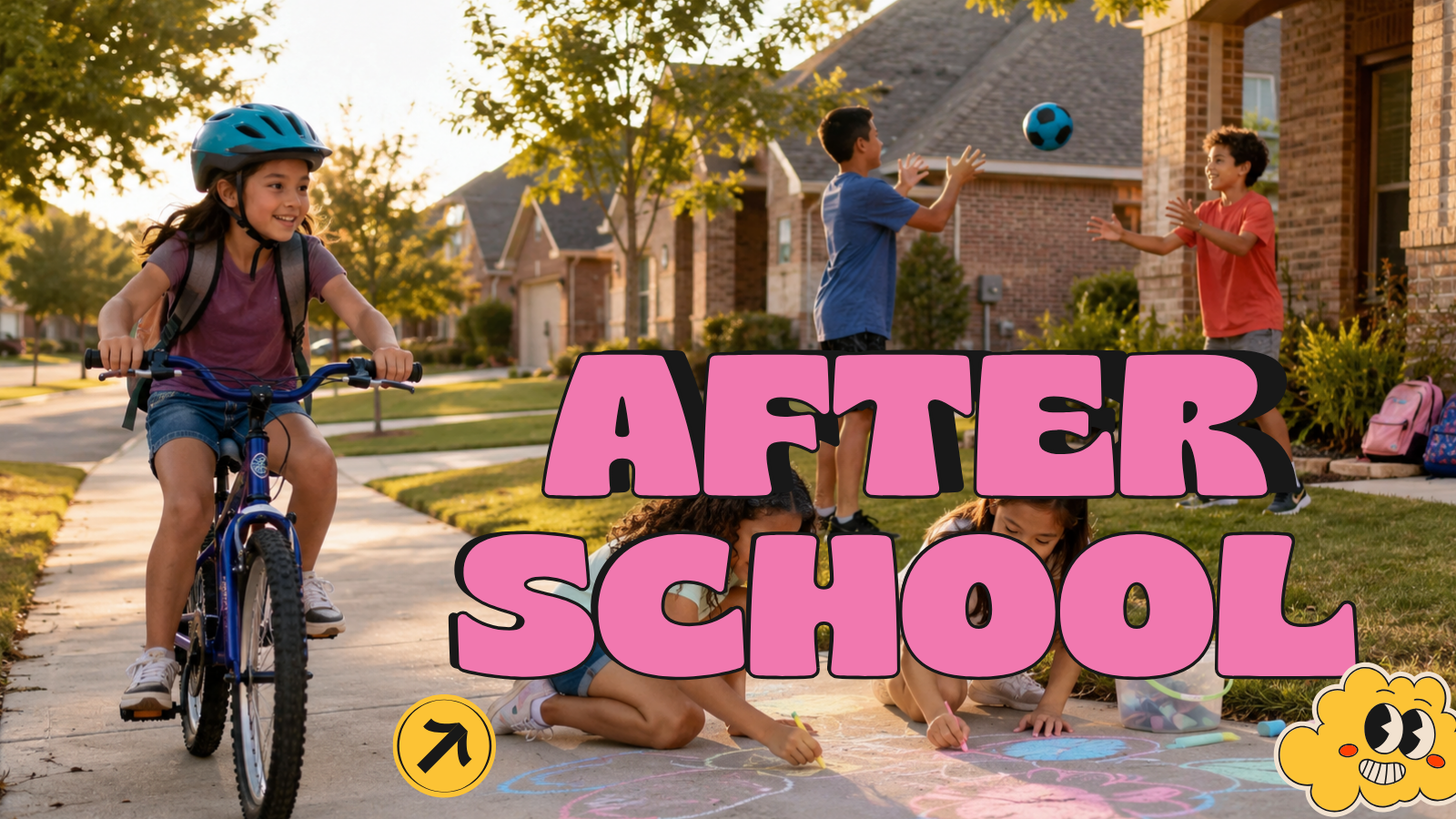
High-energy afternoon — Choose something physical: ride bikes or scooters around the neighborhood, shoot baskets in the driveway, walk or jog one neighborhood loop, set up a backyard obstacle course, play catch, soccer or four square, have a 15-minute family dance challenge.
Low-energy afternoon — Choose something calming: read together or listen to an audiobook, work on a puzzle, draw while listening to music, build with LEGO bricks or magnetic tiles, sit outside with a snack, make a blanket fort and read inside it.
Social afternoon — Choose something involving another person: invite a neighbor over for driveway chalk or basketball, organize a short bike ride with two or three friends, call a grandparent and interview them about childhood, play a board or card game, cook part of dinner together.
"I'm bored, but I reject every suggestion" afternoon — Create an activity jar. Write simple choices on slips of paper, such as "walk," "bake," "draw," "cards," "music," "outside game" and "build something." Let the child pull two and choose one. This gives them control without requiring a parent to produce an endless stream of entertainment like a cruise director with laundry.
Easy Activities Around Summer Lakes
Some of the best options require no drive at all.
Take a neighborhood observation walk. Turn an ordinary walk into a small challenge. Ask children to find five different birds, three kinds of leaves, a house number containing a certain digit, something shaped like a circle, evidence that the season is changing, or the most interesting front-yard plant.
Older children can photograph what they find and create a digital neighborhood nature journal. Younger children can carry a clipboard and make tally marks. The activity works because it gives walking a purpose beyond "we are walking because an adult said so."
Start a driveway league. Pick one easy game—HORSE, four square, hopscotch, soccer penalty kicks or cornhole—and play it on the same weekday for several weeks. Keep the rules loose enough that different ages can join.
The point is not a championship trophy. It is giving neighborhood children an easy, repeatable way to spend time together without requiring parents to plan an event every time.
Create a front-porch reading hour. Put out folding chairs, cold drinks and a basket of books or magazines. Everyone reads independently for 20 minutes, then shares one interesting, strange or funny thing they found.
For reluctant readers, comic books, cookbooks, sports magazines, graphic novels and how-to books all count. Reading becomes much less appealing when adults turn it into a courtroom argument over what qualifies as a "real" book.
Make kindness part of the week. Check whether Summer Lakes has an active community giving cause posted — kids can help sort donation items, make a shopping list from the organization's current needs, or use part of an allowance to select one item to donate. That turns an ordinary afternoon into something useful and gives children a visible connection to families in their own county.
Quick Local Outings Near Richmond
When everyone needs to leave the house—but nobody needs a full-scale expedition—these locations make practical weekday choices.
George Memorial Library (1001 Golfview Drive, Richmond) is one of the easiest after-school resets. Children can choose books, work on homework, use library resources or attend a scheduled youth activity.
The library is currently open until 9 p.m. on Mondays and Thursdays, until 6 p.m. on Tuesdays and Wednesdays, and until 5 p.m. Fridays through Sundays. Families should check the Fort Bend County Libraries event calendar before leaving home because programs and registration requirements vary.
Try giving each child a small library mission: find a book about something studied at school that day, choose one book the parent would have liked at the same age, find a cookbook and select a weekend recipe, pick a graphic novel and a nonfiction book, or locate a book that answers a question nobody in the family knows.
George Park (2155 Collins Road) has a playground, walking trail, picnic areas and space for baseball, football, soccer and sand volleyball. It is open daily from 6 a.m. until midnight, according to the City of Richmond.
A park visit does not need to consume the entire evening. Pack water, stay for 30 to 45 minutes and head home before everyone reaches the overtired portion of the program.
Clay Park (400 Riveredge Drive) offers a playground, basketball court, walking trail, pavilion and picnic area. Its posted closing time is 7 p.m., or 8:30 p.m. during daylight saving time.
This is a good choice for a quick basketball game, a walk or letting younger children use the playground while an older child reads at a picnic table.
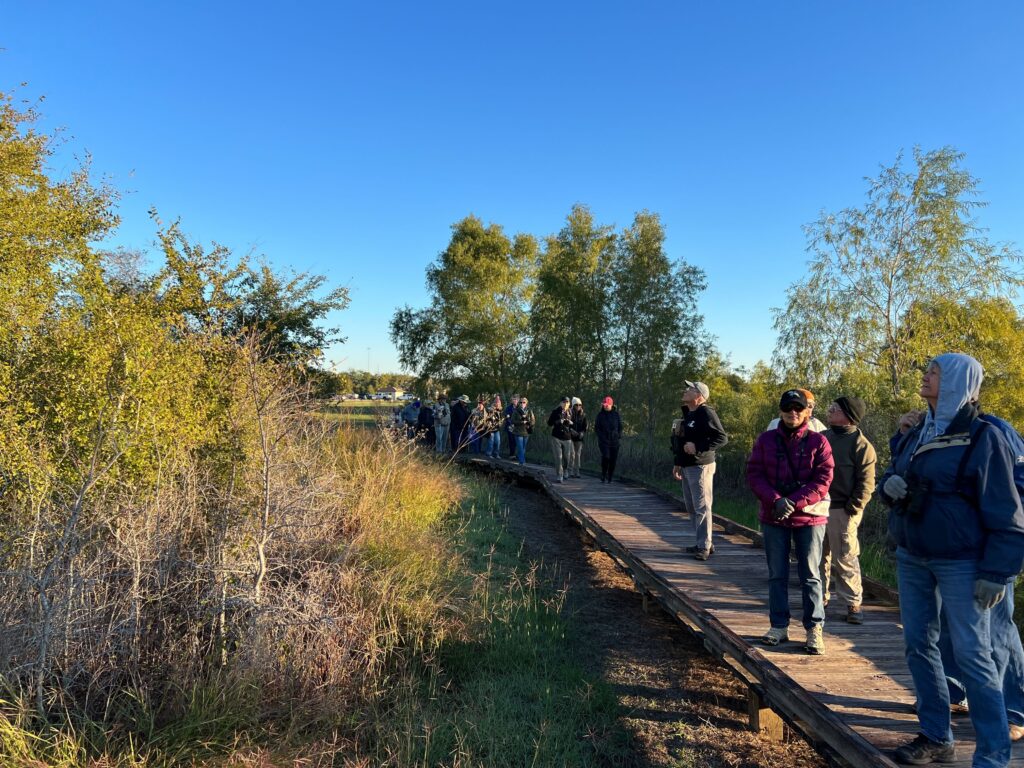
Seabourne Creek Nature Park in Rosenberg covers more than 200 acres and includes a lake, wetland and native prairie. The city reports that more than 200 bird species have been sighted there.
Because the nature park is open from dawn to dusk, it works best when there is enough daylight left after school. Bring binoculars if you have them, or use a free bird-identification app. Give each child a five-item nature checklist and keep the visit short enough that it still feels fun.
Fort Bend Children's Discovery Center, for younger children, can work on early-release days, school holidays or days when families can arrive well before closing. The center offers hands-on exhibits involving science, math, culture, art and imaginative play.
Its website currently lists regular hours of 9 a.m. to 5 p.m. Wednesday through Sunday, with new 9 a.m. to 3 p.m. Wednesday-through-Saturday hours scheduled to begin September 9, 2026. Because the schedule is changing, check the official hours page before making the drive.
At-Home Activities That Do Not Require a Craft Store
The internet has convinced parents that every children's activity needs twelve supplies, themed snacks and a finished result attractive enough for social media. It does not.
The $5 cooking challenge. Give an older child a small budget and let them choose one side dish, snack or dessert to make. Younger children can wash produce, measure ingredients or assemble sandwiches.
Build-it challenge. Choose one household material: cardboard, paper cups, painter's tape, blocks or recycled containers. Give children 20 minutes to build a bridge, tower, marble run, animal shelter or model neighborhood. Do not correct the design unless safety is involved. The wonky bridge is doing important work.
Family photo assignment. Let children use a phone or camera to complete a themed photo hunt: five textures, three examples of symmetry, something older than they are, something that represents home, the funniest object in the house.
Learn-one-thing afternoons. Pick one small skill that can be practiced for 15 minutes: shuffle a deck of cards, sew on a button, tie a useful knot, make scrambled eggs, check bicycle tires, read an analog clock, use a screwdriver correctly, address an envelope, or learn five words in another language.
Let the children plan dinner entertainment. Ask them to prepare three conversation questions, choose background music or invent a family trivia game.
Do Not Forget the Teenagers
Teenagers may not want a parent-designed "activity," especially if it arrives with enthusiasm and a printable worksheet. Offer choices that respect their independence: plan and cook one dinner each week, walk or work out while listening to a playlist or podcast, learn basic car care with an adult, take photographs around the neighborhood, create a short video about a local place or event, volunteer for a community collection drive, meet a friend at the library to study, start a small lawn, pet-care or car-washing service, or help a younger sibling with a game, sport or school subject.
A Simple Weekday Rhythm
Families do not need a different grand adventure every afternoon. A predictable weekly rhythm reduces decision fatigue: Monday for library or reading night, Tuesday for outdoor movement, Wednesday to cook or create something, Thursday for a friend, neighbor or family game, and Friday to choose your own family activity.
Homework, chores and dinner still fit around the activity. On especially busy days, shrink it to 15 minutes. Consistency matters more than duration.
The Goal Is Connection, Not Constant Entertainment
Children do not need adults to eliminate every moment of boredom. Boredom can produce creativity, independence and the sudden discovery that a child who "has nothing to do" is capable of building an elaborate blanket fortress in under nine minutes.
The goal of an after-school activity is not to fill every available second. It is to help children shift from school to home, move their bodies, use their imaginations and reconnect with family or neighbors.
Some afternoons will involve a park, a library program or a creative project. Others will involve snacks, homework and everyone making it to bedtime with their dignity mostly intact.
Both kinds of afternoons count.
Sources