Richmond, Texas Housing Market in 2026: What Buyers and Sellers Really Need to Know
By John Henson-Rogers, REALTOR® · August 2, 2026 · Updated August 25, 2026 · 8 min read
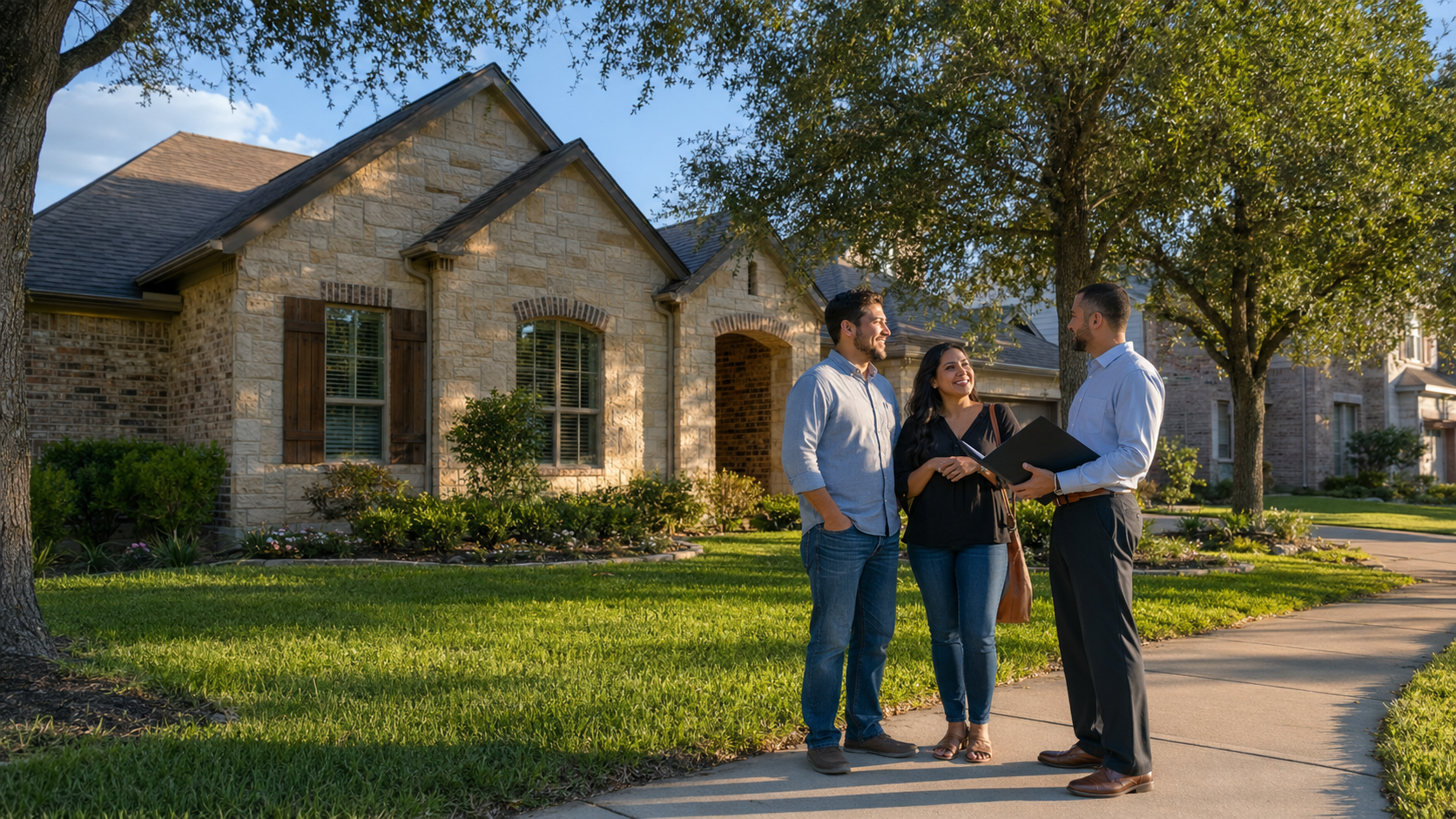
If you ask five people what the Richmond housing market is doing, you may get six answers.
One neighbor will tell you homes are sitting forever. Another will mention the house down the street that sold almost immediately. A builder representative will explain that now is an absolutely extraordinary time to buy new construction—which, to be fair, is also what the builder representative said last Tuesday. Then someone will pull out a national headline about a housing crash, and suddenly your peaceful coffee has become an economic summit.
Let us make this simpler.
As of summer 2026, buyers generally have more choices and more negotiating room than they did during the frantic pandemic-era market. Sellers can still sell successfully, but the days of putting a blurry kitchen photo online on Thursday and collecting twelve offers by Sunday are no longer a dependable business plan. Homes must compete on price, condition, presentation and location.
That sounds straightforward, but Richmond comes with one large asterisk: there is no single Richmond housing market.
First, What Do We Mean by "Richmond"?
This is where market reports can become a little mischievous.
The incorporated City of Richmond is relatively compact. The Richmond mailing area, however, stretches across a much larger portion of Fort Bend County and includes established neighborhoods, rural properties, master-planned communities and rows of brand-new homes. A property in 77469 can have a very different price, tax structure and buyer pool than one in 77406 or 77407—even though all three addresses may say Richmond.
That is why current websites can publish very different Richmond numbers and all be technically correct. They may be measuring different boundaries, property types or time periods.
For example, the Houston Association of REALTORS reported a Richmond median sales price of $390,000 for June 2026, with 280 transactions and an average market time of about 37.5 days. Zillow estimated the typical Richmond home value at $381,154 through June 2026, down 2.9% from a year earlier, with homes going pending in roughly 41 days. Realtor.com showed a $424,000 median listing price in June and classified Richmond as a buyer's market, with homes selling for about 97% of asking price on average.
Those figures are not interchangeable. One is a median closed-sale price, another is a modeled home-value index, and another is a listing-market measurement. Comparing them as though they are the same would be like comparing the dinner price, the grocery bill and the value of the refrigerator. They all involve food, but they answer different questions.
The practical takeaway is not that one website is "right." It is that your neighborhood-level comparable sales matter far more than a broad Richmond average.
So, Is Richmond a Buyer's Market?
Broadly, buyers have regained leverage.
HAR's July 2026 updates characterized both North/Richmond and South/Richmond as balanced markets, with roughly 6.1 and 6.4 months of inventory. Realtor.com called the wider Richmond area a buyer's market in June. The labels differ slightly because the boundaries and formulas differ, but they point in the same general direction: supply is no longer painfully scarce.
For buyers, this can mean time to compare homes, request repairs and negotiate on properties that have been sitting. It may also mean seller-paid closing costs or an interest-rate buydown, especially when the house has competition nearby.
But "buyer's market" does not mean "every seller is desperate." A clean, updated and correctly priced home in a sought-after pocket may still attract quick attention. Meanwhile, a similar house with a tired roof, optimistic price and mysterious carpet stain may sit long enough to develop a close personal relationship with Zillow.
The market is selective. Buyers have options, so they use them.
What Prices Are Actually Doing
The honest answer is that prices are mixed, depending on the slice of Richmond being measured.
HAR's monthly Richmond figures moved from a median of $359,900 in January 2026 to $390,000 in June. That does not automatically mean every Richmond home gained more than $30,000 in six months. The mix of homes sold can change from month to month. If more larger or newer homes close in June, the median rises even if individual house values remain fairly steady.
Zillow's broader measures showed modest year-over-year declines: Richmond overall was down 2.9%, ZIP code 77406 was down 2.0%, and 77469 was down 2.5% through June. Yet Redfin showed another part of the story. In the three months ending May 2026, its median sale price in 77406 was about $415,000, down 5.5% year over year, while 77407 was near $370,000 and up 1.3%.
Same city name. Different ZIP codes. Different housing stock. Different result.
This is why homeowners should be cautious when an online estimate announces that their home gained or lost a precise amount. Automated estimates are useful for spotting broad trends. They have not walked through your kitchen, seen the greenbelt behind your fence or noticed that the house two doors down had a remodeled interior and a three-car garage.
What Buyers Should Know in 2026
The nicest change for buyers is that many can finally shop without feeling as if someone is ringing a game-show buzzer behind them.
There is more room to look at the age of the roof, HVAC system and water heater. You can compare tax rates, homeowners association dues, MUD assessments and insurance costs before falling hopelessly in love with the oversized island. That island is gorgeous, but it will not pay the property-tax bill. Rude, really.
Buyers should pay particular attention to the total monthly cost. Two Richmond homes with the same price can have noticeably different payments because of tax rates, insurance, energy efficiency or HOA fees. Newer communities may offer builder incentives, but some also carry higher tax rates. Older homes may offer mature trees, larger lots or lower taxes, but they can bring more maintenance.
That tradeoff deserves its own conversation — compare current new-construction builders active in the area against resale before deciding which fits your budget.
Buyers should also avoid treating the list price as a starting pistol for automatic low offers. Look at recent comparable sales, days on market, price reductions and the home's condition. A property listed yesterday at a realistic price is a different negotiation from one that has been available for ninety days and already reduced twice.
Finally, do not skip insurance and flood research. Ask for available disclosures and claims history, review FEMA maps, obtain an insurance quote during the option period and understand that being outside a mapped high-risk flood area does not equal a magical force field around the property.
What Sellers Should Know in 2026
Sellers are not powerless. They simply have competition again.
When buyers can choose among several similar homes, they compare everything: price, flooring, paint, maintenance, photos, landscaping and whether the front door looks welcoming or like it has been holding a grudge since 2004.
The first two weeks matter. A new listing gets its strongest burst of attention early, so launching too high "just to see what happens" can waste the moment when the largest number of buyers is watching. Later reductions may help, but buyers can see the history and may wonder whether something is wrong.
Preparation also matters more than it did in the hottest seller's markets. That does not mean renovating the entire house until you accidentally become your own HGTV series. It means fixing visible maintenance issues, cleaning deeply, reducing clutter, improving the entry and using strong photography. Buyers understand that a resale home has been lived in. They just do not want to inherit every unfinished Saturday project.
Sellers should also think carefully about concessions. Paying part of a buyer's closing costs or funding a temporary rate buydown may protect the sale price better than a large price reduction. The best choice depends on the buyer and the numbers; concessions are a tool, not a confession.
Why New Construction Changes the Conversation
Richmond has a substantial new-home presence, and builders are not passive competitors. They can offer financing incentives, closing-cost assistance and rate promotions that individual homeowners may find difficult to match.
Texas Real Estate Research Center data illustrates how the new-versus-existing price gap has narrowed statewide. By March 2026, the reported median was $341,500 for new construction and $326,200 for existing homes—a difference of $15,300. Before the pandemic, the premium for new construction was often dramatically larger. Part of the narrowing comes from builders offering smaller, more affordable floor plans.
That does not make new construction automatically cheaper. Buyers must compare lot premiums, upgrades, tax rates, window coverings, landscaping and the cost of turning a blank backyard into somewhere humans might enjoy sitting. The model home is lovely because it has approximately seventeen throw pillows and not one visible charging cable. Real life will arrive later.
For resale sellers, the competition makes strategic pricing and presentation even more important. Your advantages may include a finished yard, established neighborhood, mature landscaping, window treatments and a location closer to existing schools or amenities. Those benefits should be shown, not merely assumed.
What About Summer Lakes?
Summer Lakes should not be valued using a Richmond-wide average alone. Homes here vary by size, age, lot, updates, builder and location within the community, and a broad city median can only provide context. Once a local IDX feed is connected to this site's Homes and Market Report pages, that comparable-sales data will be the better source; until then, a REALTOR® familiar with the community -- like the one listed in our business directory -- can pull recent comparable sales directly.
This is especially important when sales volume is limited. One unusually large, updated or distressed sale can tug a small monthly data set in a misleading direction. A rolling three-, six- or twelve-month view often tells a more useful story than a single month.
The Market Is Calmer, Not Quiet
Richmond's 2026 housing market is not frozen, collapsing or sprinting uncontrollably down the street. It is negotiating.
Buyers have more inventory and can be more selective. Sellers can still achieve strong outcomes, but they must respect the competition. New construction puts pressure on resale homes while also bringing more people, amenities and attention to the broader area. Mortgage rates and monthly affordability continue to influence what buyers can comfortably pay.
If you are still deciding whether the Richmond-Rosenberg area fits your family, start with our conversational guide to moving to the area.
The most useful conclusion is also the least dramatic: Richmond is made up of many small markets, and the right decision comes from looking closely at the specific home, neighborhood and numbers in front of you. That may not make a thrilling cable-news headline, but it is much better advice to bring to the closing table.
Data note: Market figures in this article were checked on August 2, 2026. Real-estate data changes as new listings and closed sales are reported. Different sources use different geographic boundaries, property types and calculation methods, so figures should be treated as market context rather than a valuation of any individual home.
Sources